
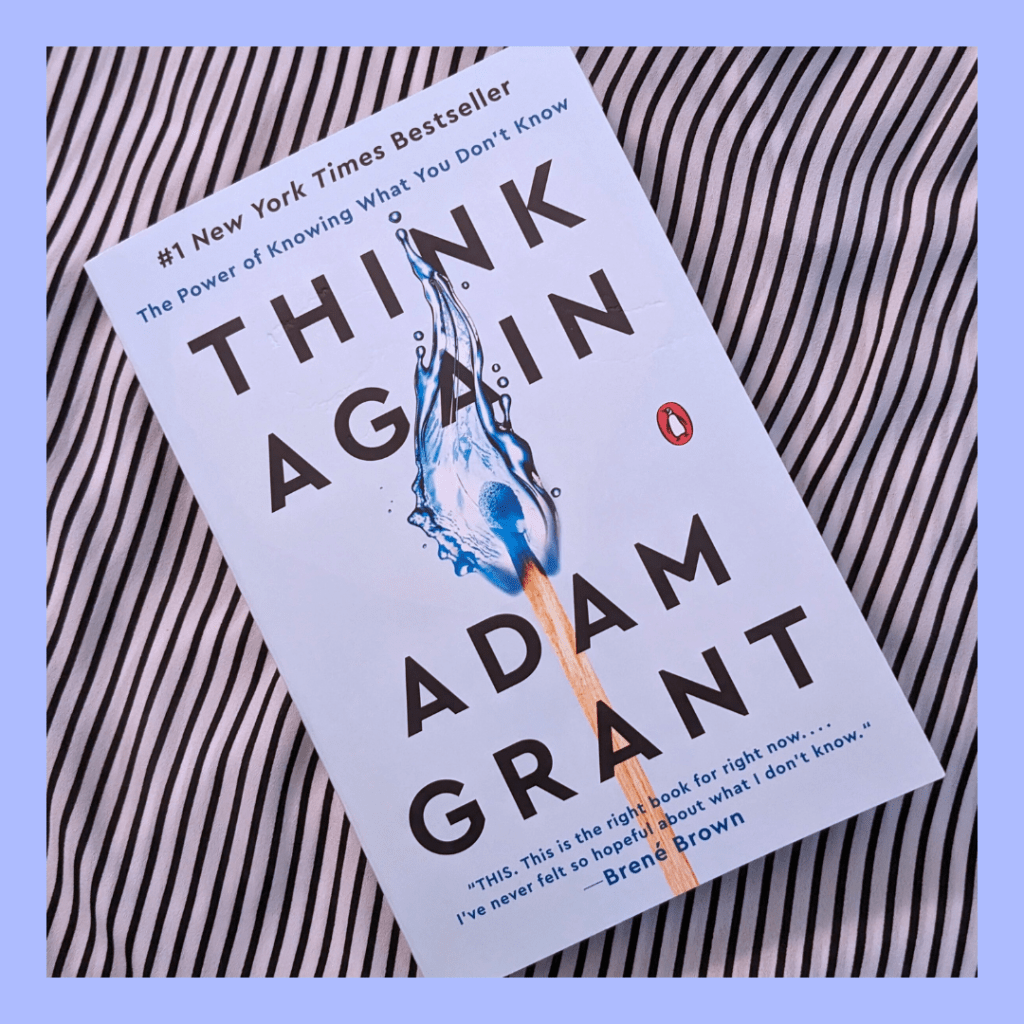
I wonder if it is a huge coincidence that within the first few pages of this book, the author mentioned an incident that was also discussed in the book I read two weeks ago, that being Range by David Epstein. I remembered the story of firefighters dying as they tried to outrun a forest fire, because they didn’t consider that the equipment they were carrying could be dropped. The equipment was a part of them, they had been trained to treat their tools as an extension of themselves. Only when it dawned upon one man that they stood a better chance of reaching safety if they dropped everything in order to gain speed were some of them able to escape the flames. The story was told there as an example of why we need to look beyond using the tools we are familiar with, which is a very abbreviated summary of the entire chapter, one which I very much enjoyed. In Think Again, the author used the survival strategy of one man as his opening argument for why it is beneficial to think of alternatives when what you know, what usually works, isn’t working. The firefighters that are trained to battle the most destructive forest fires use tools to try to stop them, heavy tools like chainsaws and axes. If the team comes to the realization that they cannot stop the fire, they resort to retreating. But there are some occasions in which the fire is moving at such a speed that even making the decision to give up on the task may be too little too late. In this such incident even after dropping their equipment it didn’t look as though the firefighters would be able to outrun the flames. So one man, Wagner Dodge, did something that seemed insane. He started another fire.
If you are considering reading this book, or if you want to look up the Mann Gulch fire of 1949, I won’t tell you why Wagner Dodge decided to create an additional smaller fire in the midst of a giant forest fire. It is actually pretty clever, and it makes for a spectacular introduction to this book. So if you couldn’t tell by my very large first paragraph, I did very much enjoy reading this. The author has a sense of humor, which I have said before and will say again, makes non fiction so much more pleasurable to read. There are charts, graphs, comics, and other visuals that provide you with nice examples to go along with the concepts you are reading through. I think the key ideas that I took away from this text are to be humble, be ok with making fun of yourself when you are wrong, always ask questions, don’t be afraid to break tradition or rattle the cage, and if you want something done, find the grumpiest people you can and tell them the task at hand is impossible because stubborn people love to prove others wrong.
May is halfway over and that means I am halfway through all the books I had picked out for the month. I had two great reads and one disappointing one, so I am optimistic about the remaining two I have waiting for me. Wish me luck, it’s been a while since I have read this many non fiction books in a row, I usually take a break in between every one or two with a science fiction or romance novel. I hope to see you back next week where I will have another review hopefully praising another amazing book.
 Nonfiction and Nonsense