
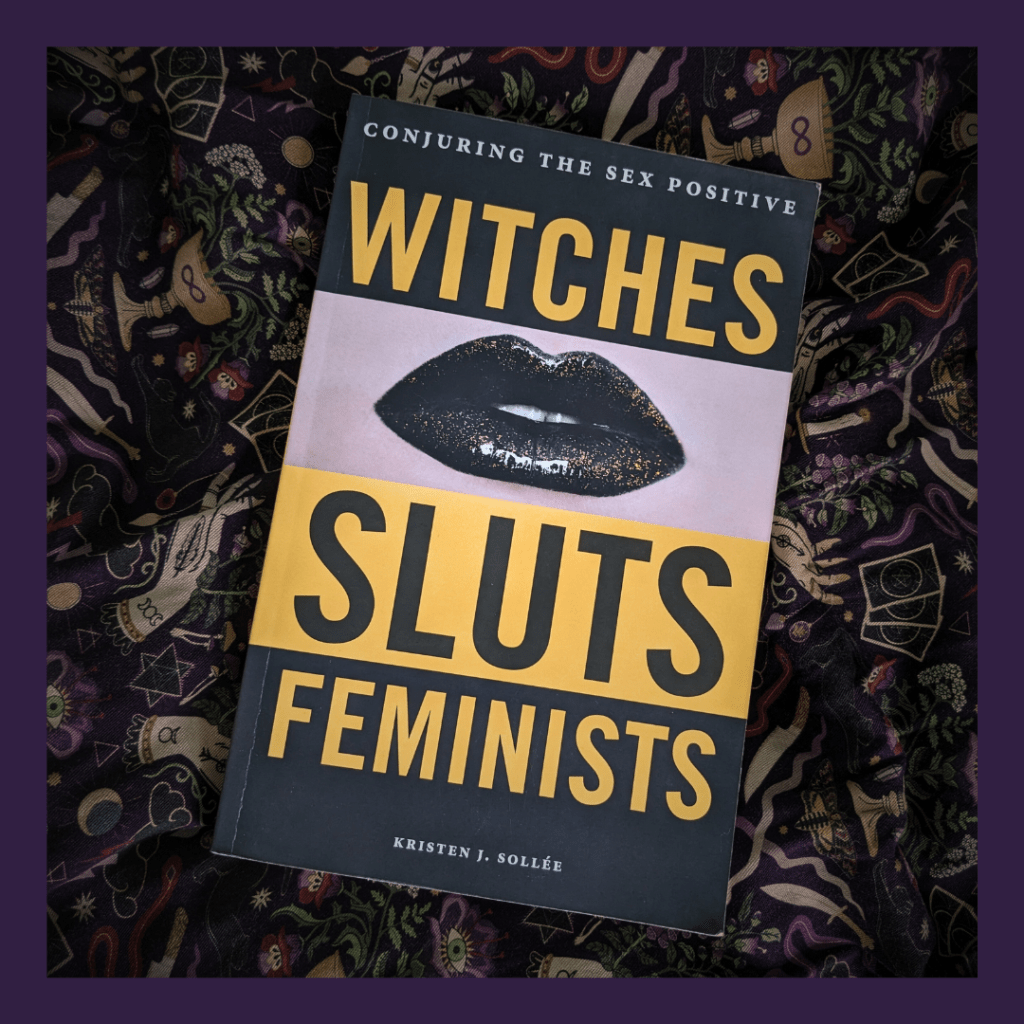
What is a witch? Do you immediately think of a woman in a black dress and pointed hat holding a broom, perhaps making a potion? Or is your definition of a witch a follower of the Wiccan religion? From Voodoo wielders of the south, to spell casters burning herbs and using the healing powers of crystals, there are many different types of witches, both from the past and in the present. What we think of as a witch has been shaped over centuries, has been influenced by story telling, movies, music, and so much more. What do sluts and feminists have to do with witches? The three words are strongly intertwined, and in some cases can be used intermittently.
Centuries ago, the word witch was a label given to a woman that was a threat either because she possessed valuable knowledge that threatened a male dominated society, or because she was different. In the instance of knowledge, the woman in question had skills that took away the business of men that were pursuing work in the same field. For example, men were particularly threatened by midwives, even though these women understood their fellow female patients’ bodies better than their male counterparts, and often delivered less harmful and more beneficial treatment. If a female healer became too popular, you can bet that the male doctor running his business in the same area would accuse her of witchcraft if he felt threatened. It didn’t matter if the female healer was better at her job, no man wanted a woman earning more business than him. Any man could claim that any woman was a witch if he didn’t want her taking all his business, and this was not limited to medical practice.
On the other end of it, witch was not always an accusation thrown at women providing healing services, but also towards women who didn’t fit in with society. If you replace the word witch with slut, you will see parallels with how the words were used in a negative way against women centuries ago versus today. In a town full of plain looking, God worshipping women, an out of town beauty passing through could find herself accused of witchcraft if jealous or frightened wives noticed that their husbands eyes were straying. It is very common today for attractive women to be called sluts, because people seem to think beauty goes hand in hand with promiscuity. In both cases, the woman in question could be completely innocent of the harsh allegations being made, but if enough people grow angry or fearful, the woman’s reputation will be destroyed.
Slut is also a slur often thrown at outspoken women, particularly avid feminists. A smart woman, one who proudly voices her opinion confidently, one who advocates for equality and change, is often referred to as a whore or slut. Feminists are the greatest threat to the patriarchy, and this causes fear. And we come full circle back to witch, a word that resulted in the useless deaths of many intelligent, outgoing, and caring women over centuries.
This book not only goes into the history of the words, how they are intertwined, but how women today are using these once negative words to bring power back to themselves. They are taking these words that once caused a lot of harm and changing their definitions. Modern witches, sluts, and feminists are making the words positive rather than negative. They are making it harder for women to be insulted by these words, they are making women feel inspired by them. After reading this book, I see how in the right circumstances being called a witch, slut, or feminist could be a glowing compliment. This book makes me want to search within myself, perhaps to find my inner witch, slut, or feminist.
 Nonfiction and Nonsense