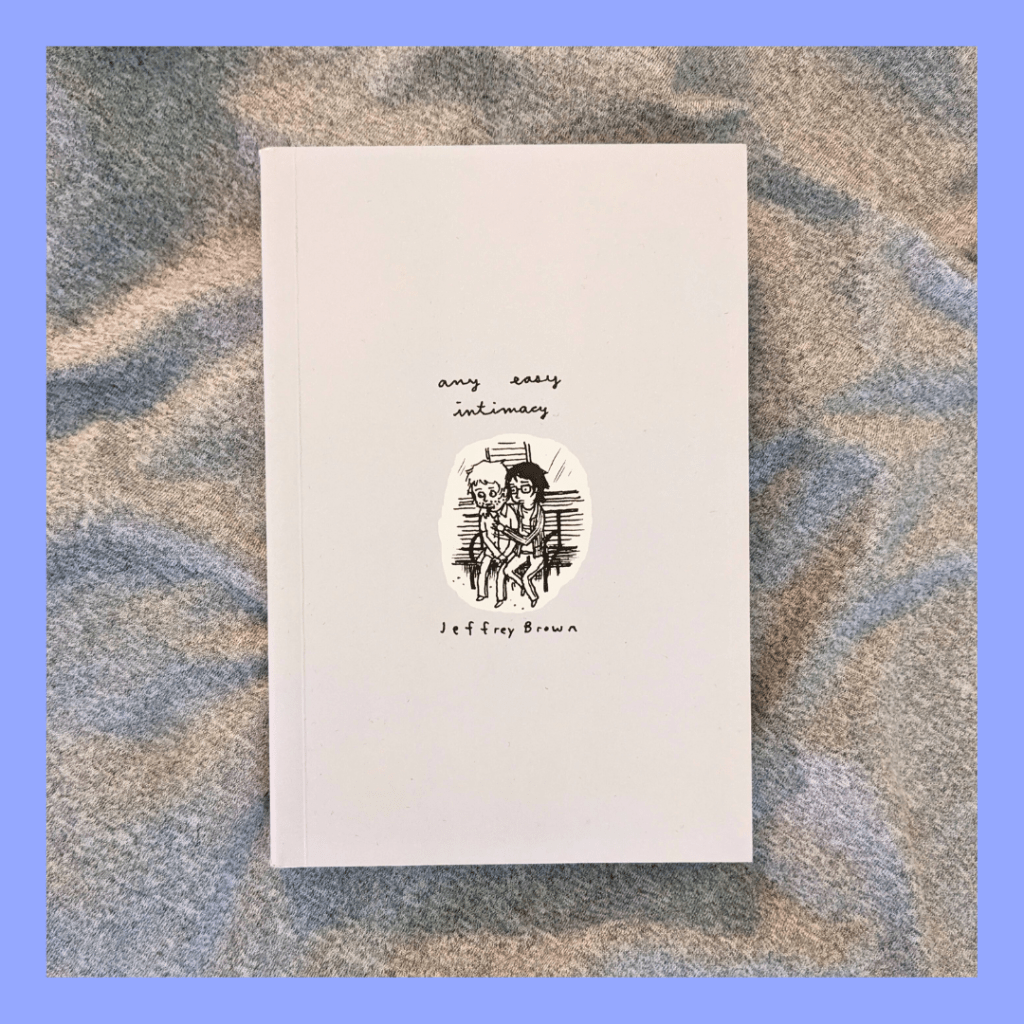
This might be the first comic book or graphic novel I’ve done a review on. I don’t remember when I first discovered Jeffrey Brown, but his little stories give me the greatest nostalgia for my youth. Every time I read one of his books I am taken back to when I was in my late teens and early twenties. His stories are cute, but also sad. I see a lot of similarities between some of the relationships he has had and some that I have been in. These books make me smile and sigh.
I love that he is a published author and an artist but his art is simple, almost childish. I don’t know if he does it on purpose or if that is truly the way he draws, but his imperfect style makes the story more relatable. Here you see a man struggling through a relationship, and the sloppy linework makes anyone without a trace of artist talent feel almost comforted through the imperfections. This is very short, I read the entirety of it during one of my lunch breaks. However, it is something that I would read again and I will be keeping this adorable pocket sized book. I need to find the rest of my collection and add to it, there will always be a time and place in my life for these stories.
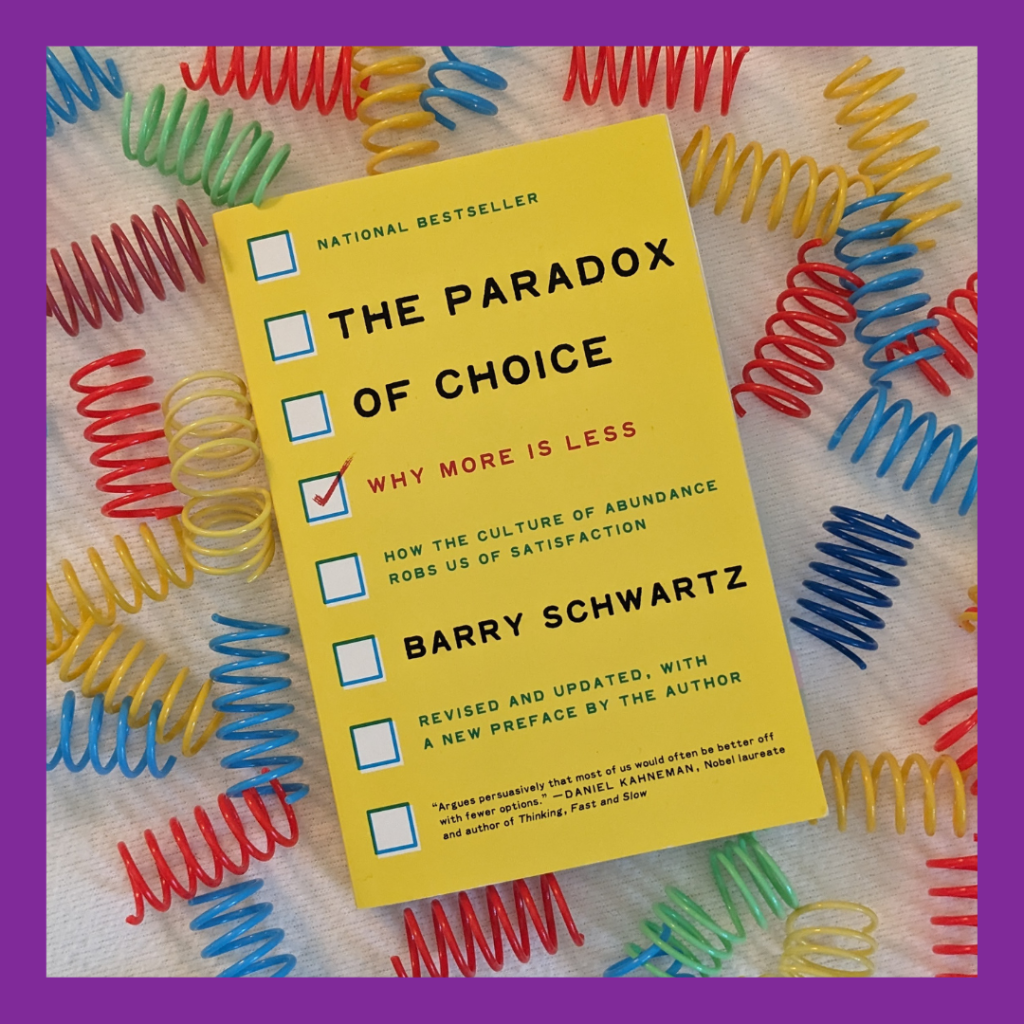
I meant to post a review for this all the way back in May, when I had planned an entire month of psychology themed reads. This review that you are reading right now almost didn’t happen, because this book almost ended up being an unfinished read. I struggled to get through this, every page was grueling. I found myself almost dreading my lunch breaks at work because that was the only time I wanted to dedicate to attempting to read this book. It wasn’t terrible, it just wasn’t entertaining. By mid book I felt as if I already guessed at a lot of what the author was telling me, because I saw a lot of real life experiences reflected in these pages.
I get overwhelmed easily. Nearly every day I try to come up with ideas to make my life less stressful. An idea I implemented a few years ago was to limit my choices. There are too many options out there, and there is not enough time in the day, in your life, to explore everything that is available when you are looking to make a purchase or research any given topic. One of the first things I did was put a limit on sneaker brands. I love sneakers, I love matching my shoes to my outfits. But I found that when I desired a new pair of sneakers that searching through all the hundreds of brands was anxiety inducing. I decided that when I wanted to buy new sneakers I would limit myself to my three favorite brands. Now, whenever I want or need a new pair of sneakers, I think about what color and style I want and I look for something that checks the boxes from one of my three chosen brands. I have also implemented this tactic not just for fashion but for gym sneakers as well. And at least in this one area of my life I have reduced my stress. I recommend trying this not just with sneakers but with other things in your life. If you need suggestions, I imagine some other things you could limit yourself with could be fast food restaurants, coffee shops, sports supplies stores, grocery stores and liquor stores, entertainment subscriptions, hotel chains, vitamin brands, and many, many other things.
The book basically goes on like that for two hundred forty pages. The author talks about how having too many options to sort through takes up more time than it may actually be worth. Looking at every option can also make you feel regret when you do make a decision and you don’t feel completely satisfied with your choice, either because your decision turns out poorly or because you have your mind on one of the other options that you didn’t go with. Basically, once you find something that checks all or almost all of your boxes you should go with it. You should be satisfied with your decision and not worrying about what else might be out there. Having written these few paragraphs I am now thinking about how I can make other areas of my life easier like I have when it comes to footwear. I think that if you find yourself overwhelmed with all the decisions you have to make in your life, then this book could be worth a read. But if you have finished reading what I’ve just told you and it makes sense then just forget the book and start making those small changes. It will save you time, and that is also a part of what this book is about.
I took a break last week in order to fully enjoy a camping trip I went on. Being in the woods for several days was very refreshing, not being in front of a screen all weekend was nice too. I didn’t get to read as much as I would have liked to, I was very ambitious and brought three books with me, plus an additional reference book about birds for bird watching, and I only got to read a few chapters from two of them. I always forget how much I enjoy watching a fire until I have one right in front of me, and once I get one started and can sit in front of it and stare at the flames for hours.
I did finish reading Soon, and I didn’t really like it but I didn’t hate it. The book is about procrastination, the history of it, why we do it, and why those who do it don’t ever intend to stop. I found it sort of ironic that the majority of the book consisted of stories about the author talking about all the things he did or would do when he was meant to be writing, and not just regarding this book but other pieces. I was expecting more out of a book that states it is ‘an overdue history of procrastination’, as in I was expecting more history. I got very little actual history. The author mentions and speaks very little about the famous procrastinators he mentions. We get a few pages each about DaVinci, Darwin, Frank Llyod Wright, noting what projects they took entirely too long to start and what they may have left unfinished. I would have much rather read a book that had either a lengthy chapter, or several chapters divided into parts, dedicated to these and other noteworthy individuals. I feel as though a lot more could have been said about the great accomplishments of some of our most gifted historical figures in terms of how they started their most famous works. I think it would make a fascinating read to learn about how they worked on their most commendable projects or studies for years and years, and how they may have gotten the push to both start and finish these masterpieces.
So I am left disappointed, again. This month has really been a fifty-fifty of hits and misses. I have one more psychology themed book to go before I begin my summer of fun fantasy reads, and I never thought I would think this but I am glad to be done with them. I hope in the future I find more pleasurable reads within the genre. I have not lost my love of the subject due to a few boring books, but I do think I need to take a break from the subject for a while to build up my faith in being able to find good reads in the future.
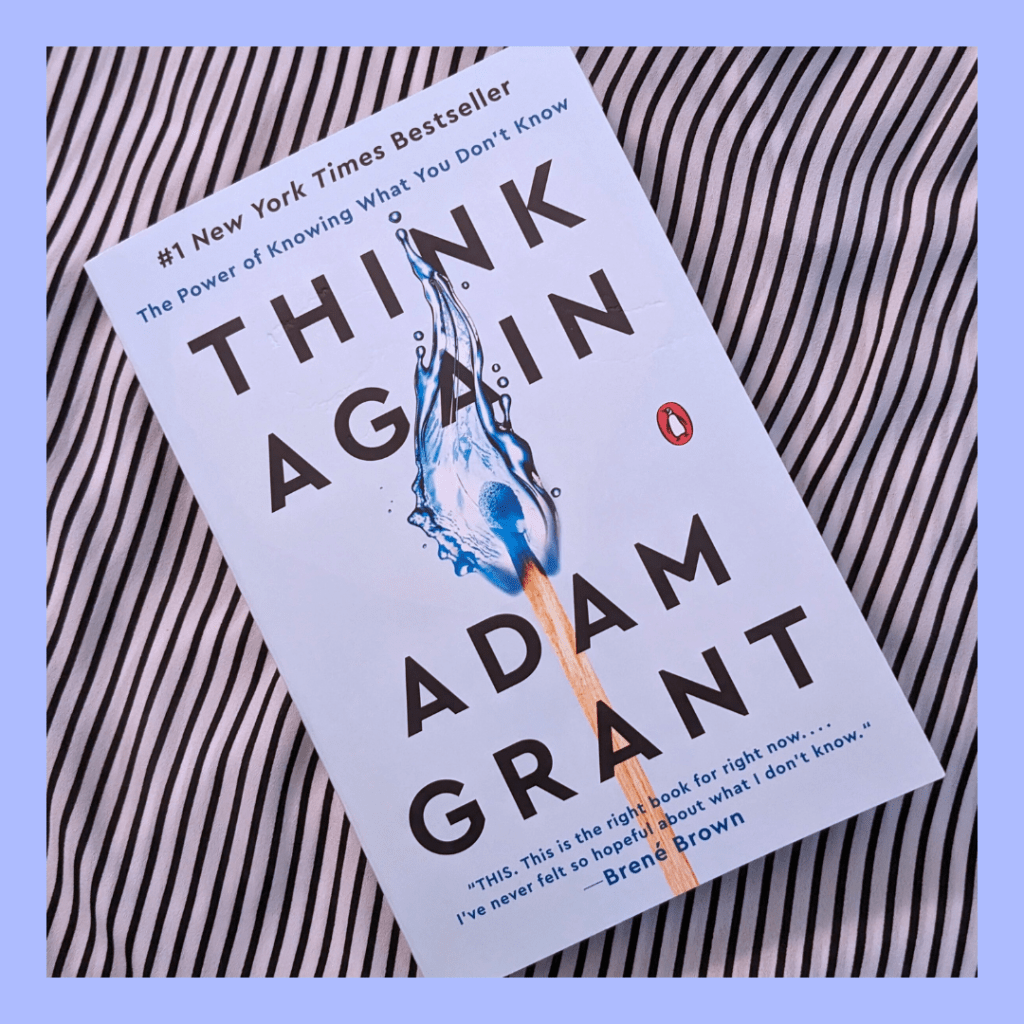
I wonder if it is a huge coincidence that within the first few pages of this book, the author mentioned an incident that was also discussed in the book I read two weeks ago, that being Range by David Epstein. I remembered the story of firefighters dying as they tried to outrun a forest fire, because they didn’t consider that the equipment they were carrying could be dropped. The equipment was a part of them, they had been trained to treat their tools as an extension of themselves. Only when it dawned upon one man that they stood a better chance of reaching safety if they dropped everything in order to gain speed were some of them able to escape the flames. The story was told there as an example of why we need to look beyond using the tools we are familiar with, which is a very abbreviated summary of the entire chapter, one which I very much enjoyed. In Think Again, the author used the survival strategy of one man as his opening argument for why it is beneficial to think of alternatives when what you know, what usually works, isn’t working. The firefighters that are trained to battle the most destructive forest fires use tools to try to stop them, heavy tools like chainsaws and axes. If the team comes to the realization that they cannot stop the fire, they resort to retreating. But there are some occasions in which the fire is moving at such a speed that even making the decision to give up on the task may be too little too late. In this such incident even after dropping their equipment it didn’t look as though the firefighters would be able to outrun the flames. So one man, Wagner Dodge, did something that seemed insane. He started another fire.
If you are considering reading this book, or if you want to look up the Mann Gulch fire of 1949, I won’t tell you why Wagner Dodge decided to create an additional smaller fire in the midst of a giant forest fire. It is actually pretty clever, and it makes for a spectacular introduction to this book. So if you couldn’t tell by my very large first paragraph, I did very much enjoy reading this. The author has a sense of humor, which I have said before and will say again, makes non fiction so much more pleasurable to read. There are charts, graphs, comics, and other visuals that provide you with nice examples to go along with the concepts you are reading through. I think the key ideas that I took away from this text are to be humble, be ok with making fun of yourself when you are wrong, always ask questions, don’t be afraid to break tradition or rattle the cage, and if you want something done, find the grumpiest people you can and tell them the task at hand is impossible because stubborn people love to prove others wrong.
May is halfway over and that means I am halfway through all the books I had picked out for the month. I had two great reads and one disappointing one, so I am optimistic about the remaining two I have waiting for me. Wish me luck, it’s been a while since I have read this many non fiction books in a row, I usually take a break in between every one or two with a science fiction or romance novel. I hope to see you back next week where I will have another review hopefully praising another amazing book.
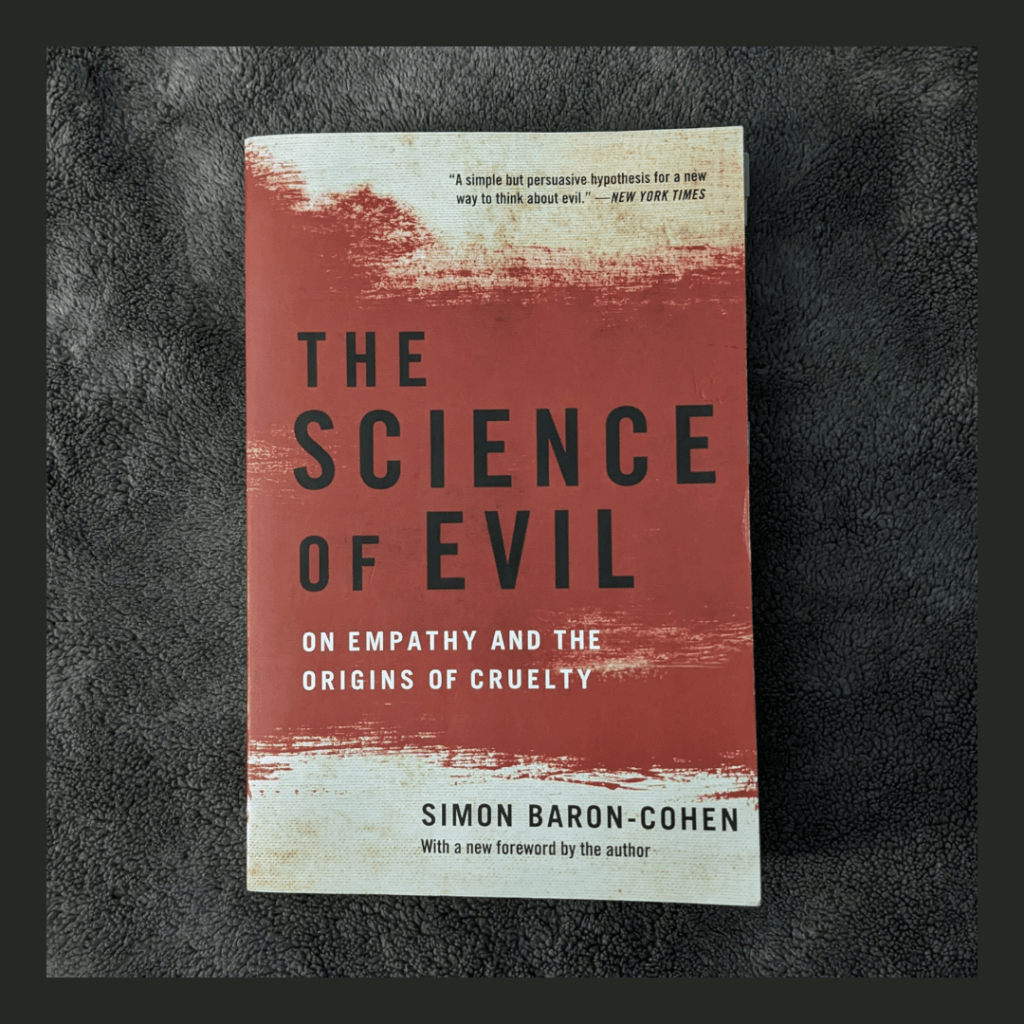
If you think the author’s name is familiar, you would be correct, he is the cousin of comedic actor Sacha Baron-Cohen. That’s probably one of the more interesting tidbits I got from reading this book. After enjoying Range by David Epstein so immensely last week, I was left incredibly disappointed in how little I enjoyed The Science of Evil. I didn’t even try very hard to take a decent picture, I just wanted to be done with this one. So I apologize for the lackluster picture and the slightly scathing review you are about to read.
I don’t want to crap on it entirely, there were some pieces of information I found interesting. I found the concept of thinking of evil as an erosion of empathy a thought-provoking topic. I even enjoyed the discussion of how this erosion can begin. I even had a little bit of fun as I took The Adult Version of the Empathy Quotient (EQ), which can be found on page twenty three, of which I will not be sharing my score. I pondered most over what Level I thought I fell into within the Empathizing Mechanism. Basically, I was fascinated with the science of the first two chapters in this text, but from there it started to fall off for me.
The next chapter, which made for good reading from a scientific standpoint, dragged a little. The author went into the three personality types in which persons with the least empathy would fall into, Borderline, Psychopath, and Narcissist. There are twenty pages going over real life human examples of Borderline types, why these people are like this, what are the causes, what their brains are like, and so forth. There are then another twenty plus pages which go over the Psychopath personality type. But then there are only seven short pages discussing the Narcissist personality type, and I felt robbed. The following chapter discussed the positive side of lacking empathy, in the way of autism and Aspergers. I have nothing positive or negative to say regarding this section, it was just an alright chapter for me. Following this, there is a chapter that goes into the genetic implications of having low, medium, or high levels of empathy, which was fairly interesting. Then it got weird.
You would think that this book would stick to what is based in fact, or theories that can be hypothesized based on research, the science of what causes a person to have low, medium, or high empathy. The title of the book itself leads you to believe this is a purely scientific text. But the last chapter, which I found difficult to enjoy and even more challenging to see how it fit in with the rest of the book, got religious. I just didn’t feel like the last chapter had a place in this particular book. I think the book would have been better having left it out entirely.
Since I can’t think of a better way to end this blog post, let me just say that I am hoping for a more enjoyable book next week.


 Nonfiction and Nonsense