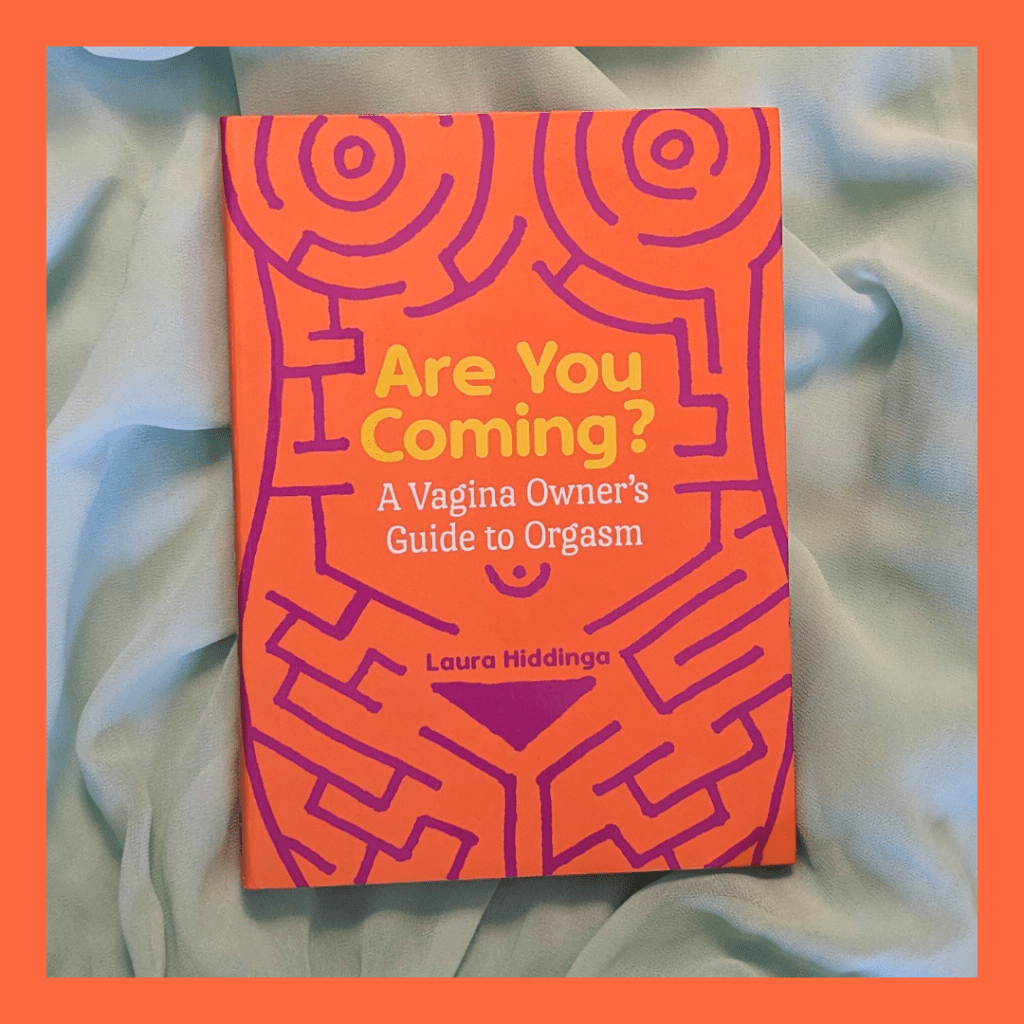
Are You Coming? by Laura Hiddinga

If you have the anatomy of a female, this book is a must read. Most Americans have some form of sex education in school, and I’d like to think my elementary, middle, and high school lessons on the subject were very good, especially when compared to the curriculum of the nation at large. But I learned things from this book that I did not learn in school. To be fair, I will say that a great deal of the information includes discoveries that were probably made well after I graduated high school. Even so, it’s amazing to me that there are so many more different forms of female pleasure than I was previously aware of. On top of that, science is still waiting to discover even more about the female body. 

If you don’t want to read an entire book on the subject, even just reading one of the chapters could be very enlightening. In these pages you might find the answers to some problems you might be having, or you might learn that something that you personally experience has a name and is experienced by others as well, making you feel less alone or even amongst friends in a way. The book is broken down into the basics, the different types, techniques, how to talk about it, difficulties with it, positions, and devices you can add. For the length of this book, your money is worth what you pay for it. I also love the cover art. The female body being portrayed as a maze that you need the patience and time to navigate is what I believe the author was going for here, in terms of an artistic metaphor. I explore the female body even further with the book I will be discussing next week. I was actually reading the two in tandem and just finished this one first, but they compliment each other very well. I hope you’ll return to see what I have to say about it.
The 7 Habits of Highly Effective People by Stephen R. Covey

This is not a one time read, this is a book you keep on your shelf in plain sight because until you grasp all the concepts, and are practicing them regularly, you both will and should continue to go back to it. It is not the most engaging read, I had to tell myself I wasn’t done for the day unless I finished a chapter. But, it is full of advice and lessons that you can use daily. You won’t become an expert after one read, that is made plain and clear, these habits take time and effort to master. 

I did take a lot of notes while I was reading and I used a lot of post its to mark sections that intrigued me or spoke to me. I do not see myself practicing all of the habits in this book, I do not aspire to become a master of the seven habits, but I do see myself using bits and pieces as a means of self help. I loved that there were a lot of charts, diagrams, and visual examples throughout, they definitely made understanding the concepts much easier. I also loved the many stories the author referred to. It was very fitting, using his real life experiences as a way to teach us about the seven habits. I feel like without these true stories the book would not have been as effective or made as much of an impact as it would have without them. I greatly appreciated the author telling his personal stories. 

I’m not going to explain any of the habits to you, you can only truly learn them and how they can help you if you take the time to read about them for yourself. It would be impossible for me to summarize the contents of this book to anyone, it is vastly informative. But, I can say that I can see this book being good for a lot of people. If you are having problems at work, with family or friends, with your life partner or children, or if you are feeling lost, unmotivated, unsure of what to do, there are solutions for how to deal with all of these issues.

The Mastery of Self by Don Miguel Ruiz Jr.

This book I borrowed from my friend after I saw it in his room. I wanted to read it as soon as I saw it because it was laying in the room of a man who does not read, so it must have been something very special for him to have brought it home. 

This is a quick read, but you get so much out of it in the short amount of time it takes to get through it. It’s both religious and spiritual, insightful and helpful, particularly for those who take the time to consider the hypothetical scenarios and perform the exercises at the end of each chapter. It’s also philosophical, you question the methods as you are reading about them, you wonder if the practices as described by the author would actually help you. I found myself interested in trying some of the exercises but also doubting the usefulness of others for me personally. Perhaps I doubted some of the practices because I am in a very negative mood right now, there is not a lot in my life that is going well at the moment. There were a lot of ideas that I did not see as being useful for me in the present or in the future. Perhaps I should come back to this book when I am in a more positive place and reassess the contents within, although I feel like that is opposite of the point the book is trying to make. It gives the impression that you need to love yourself at your worst or you will be unable to love yourself at your best although the message is much deeper than that. I think, in the end, I can probably take a few of the ideas here and find a way to use them to help myself.

Off The Clock by Laura Vanderkam

I was at the mall book store having a casual browse, which is incredibly dangerous, and I saw this in the discount section. I am so happy that I bought it, because I love this book. I did not have a hard time finding a block of time in the day to fit in my daily read because I always looked forward to it. This book is very well written, well organized, and it is full of helpful tips.

Off The Clock is divided into seven sections, each describing a different way to go about making the most out of your time. I found something useful or inspiring in every chapter and I even had a few moments where I was like, wow, that is a great way to go about thinking and why have I never considered it that way before. 

The first chapter, Tend Your Garden, is about dedicating time, you don’t need to schedule every minute to make sure you have enough time to do everything you want or need to do. Chapter two, Make Life Memorable, discusses the idea that we don’t really want more time, we just want our time to be filled with moments that we remember. The third chapter, Don’t Fill Time, deals with not over scheduling yourself. Chapter four, Linger, is about enjoying the moment and not thinking about what you have to do next. The fifth chapter is titled Invest In Your Happiness, which is all about doing the important things or things that really matter first, so that you have more time in which to do things that make you happy. Chapter six, Let It Go, tries to help you in letting go of unrealistic expectations. There was a really great sentence on page 177 about relationships that I particularly liked, and I won’t even try to summarize it because it was written perfectly. The last chapter, People Are A Good Use Of Time, gives advice on how to choose who to spend your time with and why it is good to invest in people. 

I can’t wait to try implementing some of these concepts into my own life, I’m optimistic that they will be helpful. I highly recommend this book for anyone who is looking for a self help read regarding how to better manage your time. It reads like a novel rather than a self help book, which makes it a much more pleasant read than your typical guide book.